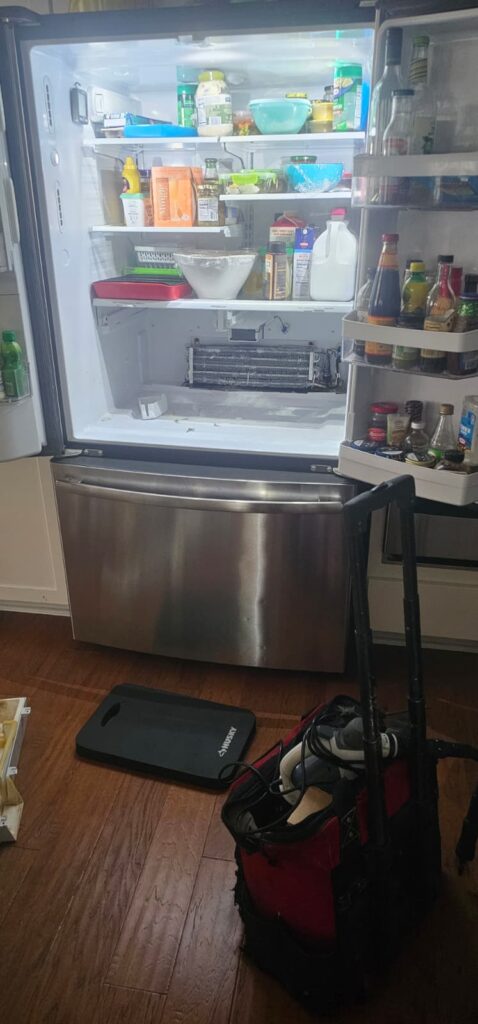
A fridge not cooling can quickly turn into an expensive household emergency. Milk spoils, frozen food begins to thaw, and fresh groceries become unsafe to eat. The problem may result from a simple temperature setting, a blocked air vent, a dirty door seal, or a failed refrigerator component.
Virginia homeowners can complete several basic checks before scheduling refrigerator repair. However, electrical faults, refrigerant leaks, compressor failures, and recurring frost problems require professional diagnosis.
Use these 5 refrigerator troubleshooting steps to identify the problem and determine when to contact Alliance Appliance Services LLC for appliance repair in Virginia.
What Temperature Should Your Refrigerator Maintain?
A refrigerator should maintain a temperature of 40°F or below, while the freezer should remain at 0°F. An appliance thermometer provides a more accurate reading than touching food or checking the temperature of the circulating air.
Place the thermometer in the center of the refrigerator and wait several hours before checking it. Temperatures above 40°F may allow bacteria to multiply in perishable foods, including meat, dairy products, cooked meals, and seafood.
According to the FDA, refrigerated food may remain safe when it has been above 40°F for no longer than 2 hours. When the temperature history is uncertain, discard high-risk food instead of relying on its appearance or smell.
What Should You Check Before Troubleshooting a Warm Fridge?
Start by checking whether the refrigerator light, display, compressor, and fans are operating. Listen for humming, clicking, buzzing, or unusual silence.
Consider recent events, including:
- A household power outage
- A tripped circuit breaker
- A large grocery load
- A door left open
- A recent temperature adjustment
- A refrigerator that was moved or unplugged
Do not remove electrical panels or touch internal wiring. Disconnect the refrigerator from power before cleaning accessible components, and follow the manufacturer’s instructions for your specific model.
1. Is the Refrigerator Receiving Power?
A loose plug or tripped breaker can stop the cooling system even when the interior light appears to work. Check whether the power cord is fully connected to the wall outlet. Inspect the electrical panel for a tripped breaker and reset it if appropriate.
Avoid connecting a refrigerator to an extension cord. A refrigerator requires a stable power source because its compressor draws additional electricity when starting.
Some refrigerators must be manually turned on after a power outage or surge. Others may enter Showroom, Demo, or Cooling Off mode. Whirlpool recommends confirming that cooling is enabled and checking the owner’s manual before changing operating modes.
When the outlet has no power, the breaker trips repeatedly, or the power cord becomes hot, contact a qualified professional.
2. Are the Temperature Controls Set Correctly?
Someone may accidentally change the temperature while cleaning shelves or placing food inside the refrigerator. Digital models may also display a selected setting rather than the appliance’s actual internal temperature.
Check the recommended setting in the owner’s manual. Many manufacturers use approximately 37°F for the refrigerator and 0°F for the freezer, although controls vary by model.
Adjust the setting gradually. Selecting the coldest setting does not provide an instant fix and may cause the refrigerator to run longer than necessary. Allow up to 24 hours for the temperature to stabilize after changing the controls, adding groceries, or reopening the refrigerator after a power interruption.
3. Are Food Packages Blocking the Air Vents?
Refrigerators move cold air between the freezer and fresh-food compartments through internal vents. Containers placed directly against these vents can create warm shelves, frozen vegetables, or uneven cooling.
Common airflow obstructions include:
- Large food containers
- Pizza boxes
- Bags of frozen vegetables
- Overfilled door shelves
- Ice buildup near a vent
- Food pressed against the back wall
Rearrange the contents so air can circulate packages. Avoid packing the refrigerator full. Samsung and Whirlpool identify blocked vents and overcrowded compartments as common causes of poor cooling and temperature fluctuations.
Leave enough exterior clearance around the appliance as specified in its installation guide. Restricted ventilation behind the refrigerator can also make the cooling system work harder.
4. Is the Refrigerator Door Sealing Properly?
A damaged or dirty refrigerator gasket allows cold air to escape and warm, humid air to enter. The appliance may run continuously but still fail to maintain a safe temperature.
Inspect the rubber gasket for:
- Food residue
- Cracks or tears
- Loose sections
- Warped corners
- Condensation
- Frost near the door
Clean the gasket with warm water and mild soap. Remove sticky residue from both the gasket and cabinet surface. Check for containers, drawers, and shelves preventing the door from closing.
You can also close the door over a sheet of paper. Resistance when pulling the paper suggests that the seal is making contact. Little or no resistance may indicate a weak gasket, although a technician should inspect the complete seal before replacement.
Damaged door seals can reduce cooling performance and contribute to condensation or frost buildup.
5. Are the Condenser Coils Dirty?
Condenser coils release heat collected from inside the refrigerator. Dust, pet hair, lint, and kitchen grease can restrict airflow around accessible coils and reduce cooling performance.
However, not every refrigerator requires coil cleaning. Many newer models use enclosed or low-maintenance condenser systems. Check the owner’s manual before attempting this step. GE advises cleaning coils only when the model instructions identify them as accessible and serviceable.
When cleaning is permitted:
- Unplug the refrigerator.
- Move it carefully away from the wall.
- Remove the lower grille when instructed.
- Use a soft coil brush and vacuum.
- Replace the grille and reconnect power.
Do not bend tubing, remove sealed panels, or apply water to electrical components.
When Should You Call a Refrigerator Repair Technician?
Basic troubleshooting cannot repair a failed compressor, defective thermostat, damaged control board, refrigerant leak, or malfunctioning evaporator fan.
Schedule professional refrigerator repair when:
- Both compartments remain warm
- The compressor repeatedly clicks
- The refrigerator trips the breaker
- Heavy frost returns after removal
- A fan makes grinding or squealing sounds
- Water leaks near electrical components
- An error code remains on the display
- The refrigerator runs continuously
- The freezer works, but the fridge stays warm
- The appliance produces a burning smell
These symptoms require diagnostic tools and model-specific technical knowledge. Attempting sealed-system or electrical repairs without training can damage the appliance and create safety risks.
Why Should Virginia Homeowners Choose Alliance Appliance Services LLC?
Alliance Appliance Services LLC provides refrigerator repair and other appliance repair services from Springfield, Virginia. Its service coverage includes surrounding communities in Virginia, Maryland, and Washington, DC. The company repairs household appliances such as refrigerators, dishwashers, dryers, ovens, stoves, and washing machines.
A professional technician can inspect the complete cooling system, including the condenser fan, evaporator fan, temperature sensors, start relay, defrost system, control board, and compressor. Accurate diagnosis helps prevent unnecessary component replacement.
Virginia’s warm and humid summer conditions can also increase refrigerator runtime. Adequate ventilation, clean seals, correct settings, and prompt repairs help the appliance maintain stable temperatures during periods of higher demand.
How Can You Fix a Fridge That Is Not Cooling?
Begin with the 5 safest fixes: confirm power, verify temperature controls, clear blocked vents, clean the door gasket, and inspect accessible condenser coils. Monitor the refrigerator with an appliance thermometer after making changes.
When the temperature remains above 40°F, protect your food and avoid repeated DIY experiments. Contact Alliance Appliance Services LLC for professional appliance repair in Virginia. Timely refrigerator service can restore safe cooling, prevent additional component damage, and reduce the risk of losing an entire refrigerator full of food.